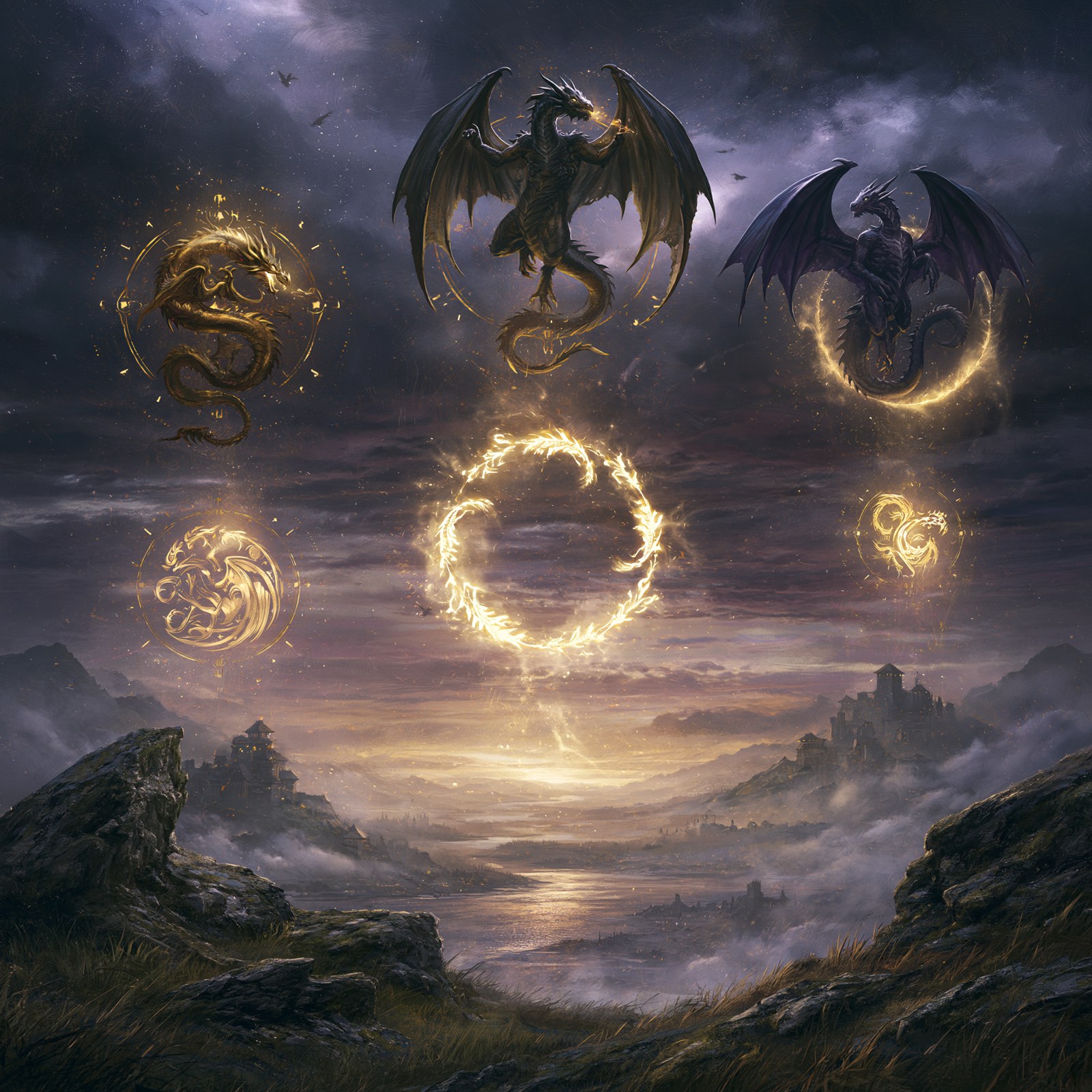
A Fallen Wyrms Saga
House of the Tempest
Book One
Begin
I am the one who remembers. I have set down many endings. This is the account of a beginning that wore an ending's face: the night the light went out, and the world did not yet know which kind of night it was.
There are lights in the far sky that the Faithful have watched for an age. They say the gods, when they withdrew, left them there as a watch kept over the world they would not stay to hold, and that while those lights burned the promise held, that the gods would return. From one of them the Faithful drew a flame, and they have tended it in the Hallowed South since before any living memory, calling it the Everflame, the answer on the ground to the promise in the sky.
I will tell you plainly what almost no one living knew. The lights are not a promise. They are only lights. But a true thing and a believed thing can share a night, and on the night I set down here they went out together, the watch-light above and the Everflame below, in the same dark hour, for the first time since the world was broken.
I did not save it. I take no side, and I lifted no hand. I only watched, and I wrote it down, so that whatever the light was, and whatever its going meant, there would remain a true account of the night it failed. Here is the night, as it was.
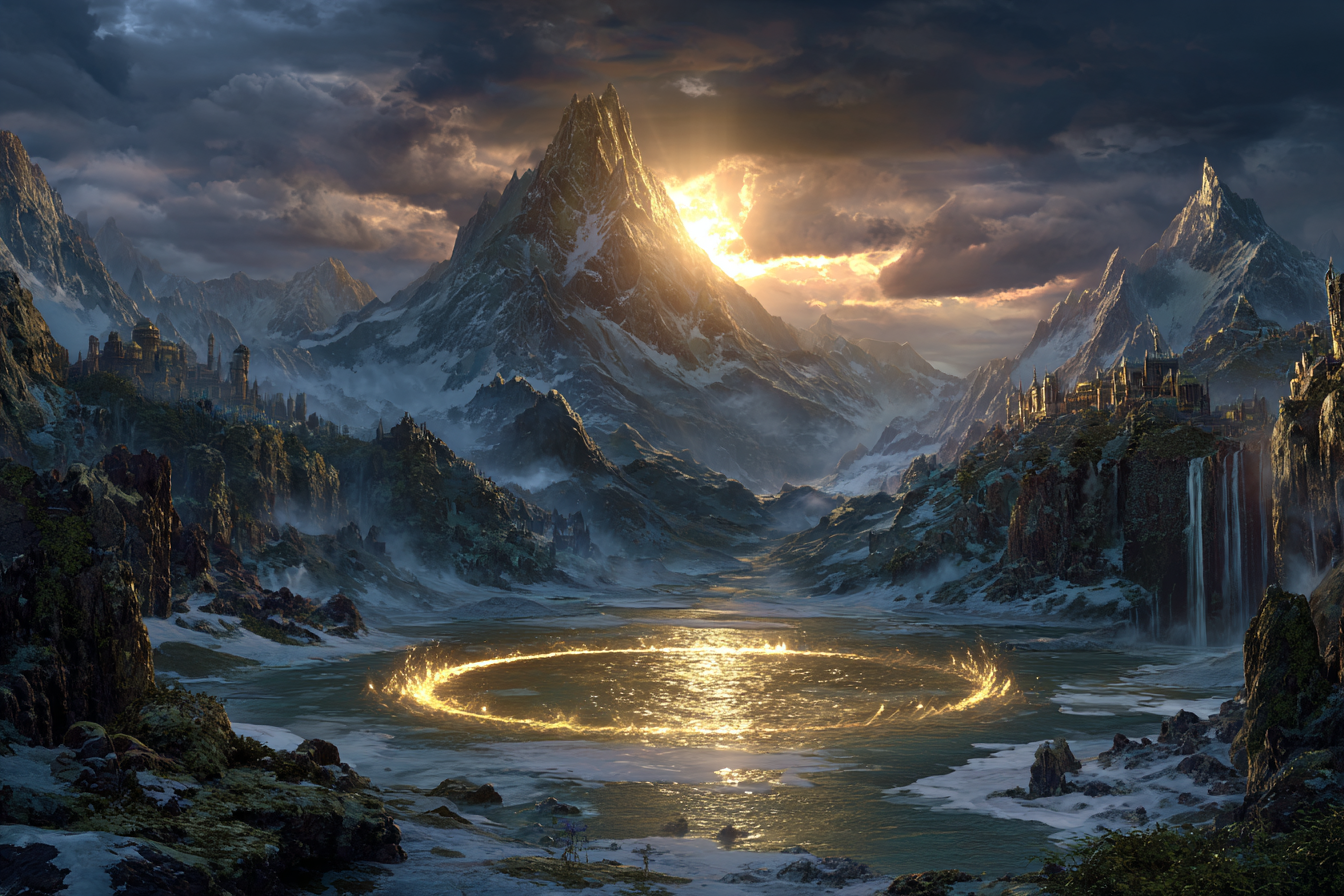
The keeper of the Everflame was old, and in all her years she had never once seen it falter. It burned in a bowl of dark stone at the heart of the oldest temple in the Hallowed South, where the land runs warm and golden toward the Wellspring and the light lies thick on everything, honeyed in the mornings and slow to leave at dusk. It had burned there, they said, since before the temple, since before the city that grew up around the temple, since the first of the Faithful climbed to a high place on the night the gods went away, caught a single coal out of the falling dark, and swore on her knees to keep it.
The keeper had given the flame sixty years. Her mother had given it forty before that, and taught her the whole of the office in a handful of quiet sentences, most of which were about patience. It was not a large flame. It had never needed to be. It only needed to be, and it always had been, the way the sun is, the way the sea is, a thing you do not think to thank because you cannot imagine its absence. The pilgrims came in their thousands to stand in its small gold light and feel, for a while, that the promise was true: that the gods had not abandoned the world, only stepped back from it, and that while the flame burned they would one day come home.
That night the keeper felt the absence before she saw it. She was on her knees at the bowl before she remembered rising from her cot. The temple was too cold, a chill in a place that had not been cold in living memory, and the flame itself was drawn down to the size of a child's fingertip and burning the wrong color, not gold now but a thin, failing blue, and it leaned, as though something beneath the stone had taken hold of it and was drawing it slowly down.
She did what her mother had taught her, and her mother's mother before that. She fed it the sweet oil from the silver flask kept for feast-days, and it drank the oil and did not rise. She cupped her hands around it and gave it her breath, slow and even, the way you breathe for someone who has forgotten how, and it took her breath and did not rise. She said the words, which were not a spell but only a promise worn smooth by ten thousand nights of saying: keep faith, keep the flame, the gods will come again while it burns.
The flame did not care for the oil, or the breath, or the words. It drew down to a bead, and the bead to a point, and the point to nothing at all, and where it had been there was a thin curl of smoke, and then not even that.
The light below and the light above had gone out together, and they were the same darkness, and it was hers to have witnessed.
The keeper knelt in a dark that had no name, because in all the memory of the world there had never been need of one. She did not weep. That would come later, to all of them. In that first moment there was only a terrible clarity, the mind reaching for something ordinary to hold and finding nothing, because nothing about this was ordinary, because this had never happened and could not happen and had just happened, in her hands, on her watch.
Above her, through the high stone eye in the temple roof that had been cut so the flame could always answer the sky, she could see the far dark, and she understood, with a certainty that arrived whole and unasked for, that one of the watch-lights was gone from it. There had been seven since the beginning. She did not need to count to know there were six.
Then the bells began, because others had looked up too. They started at the great temple and spread outward, tower to tower, until the whole of the golden city was ringing, and the people came out into their streets in their night-clothes and looked up and saw what she had seen, and the sound they made was not like any sound the Hallowed South had made before. It was the sound of a people who had been promised something all their lives, without ever once being asked whether they believed it, discovering in a single hour that they had believed it after all, and that it was gone. The crying rolled out over the warm land and down toward the Wellspring at the world's foot, where the last and greatest light of all guttered, once, hard enough that ships in the southern roads saw the shadows lean, and then, mercifully, held. For now.
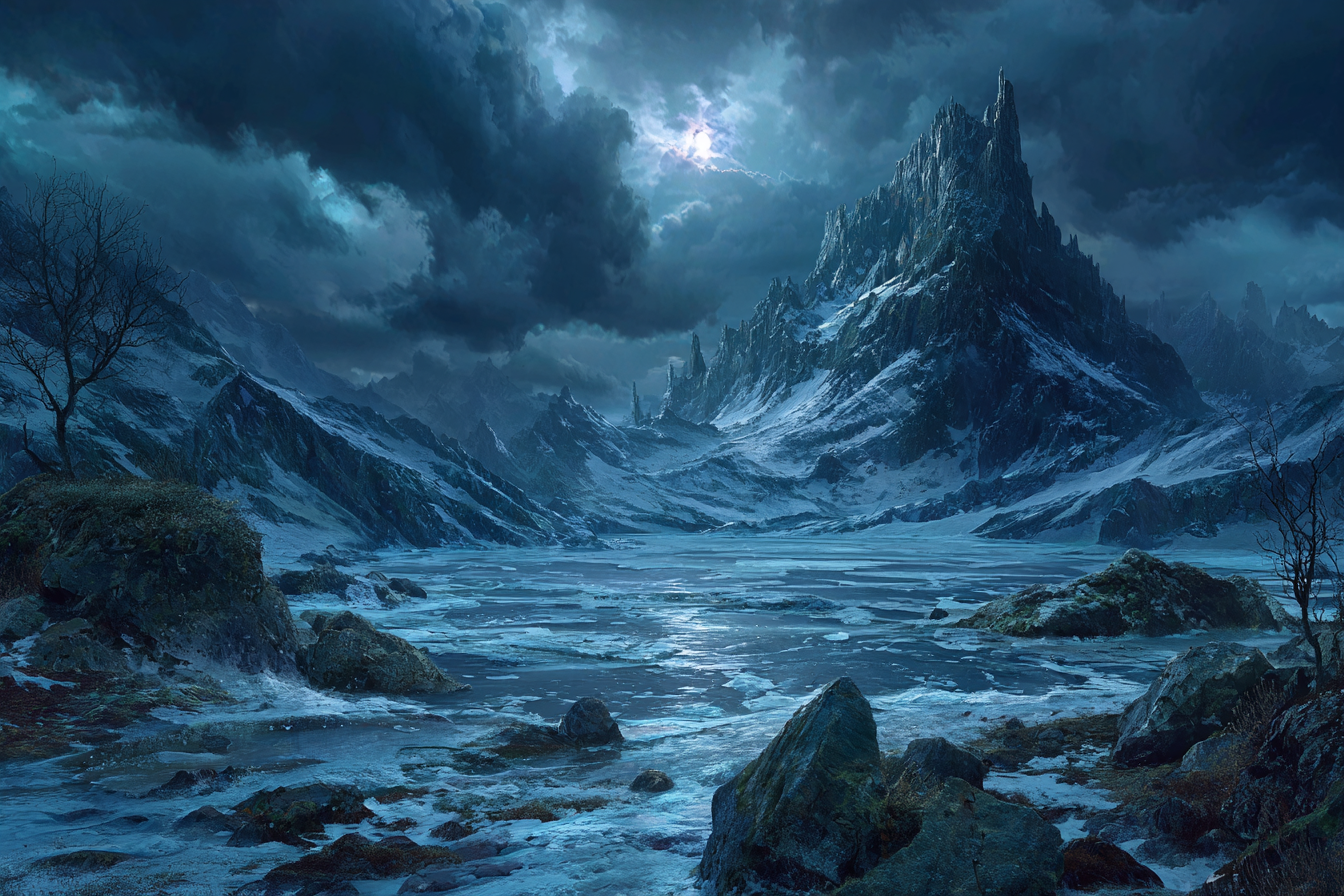
That same night, the dark came differently to other places.
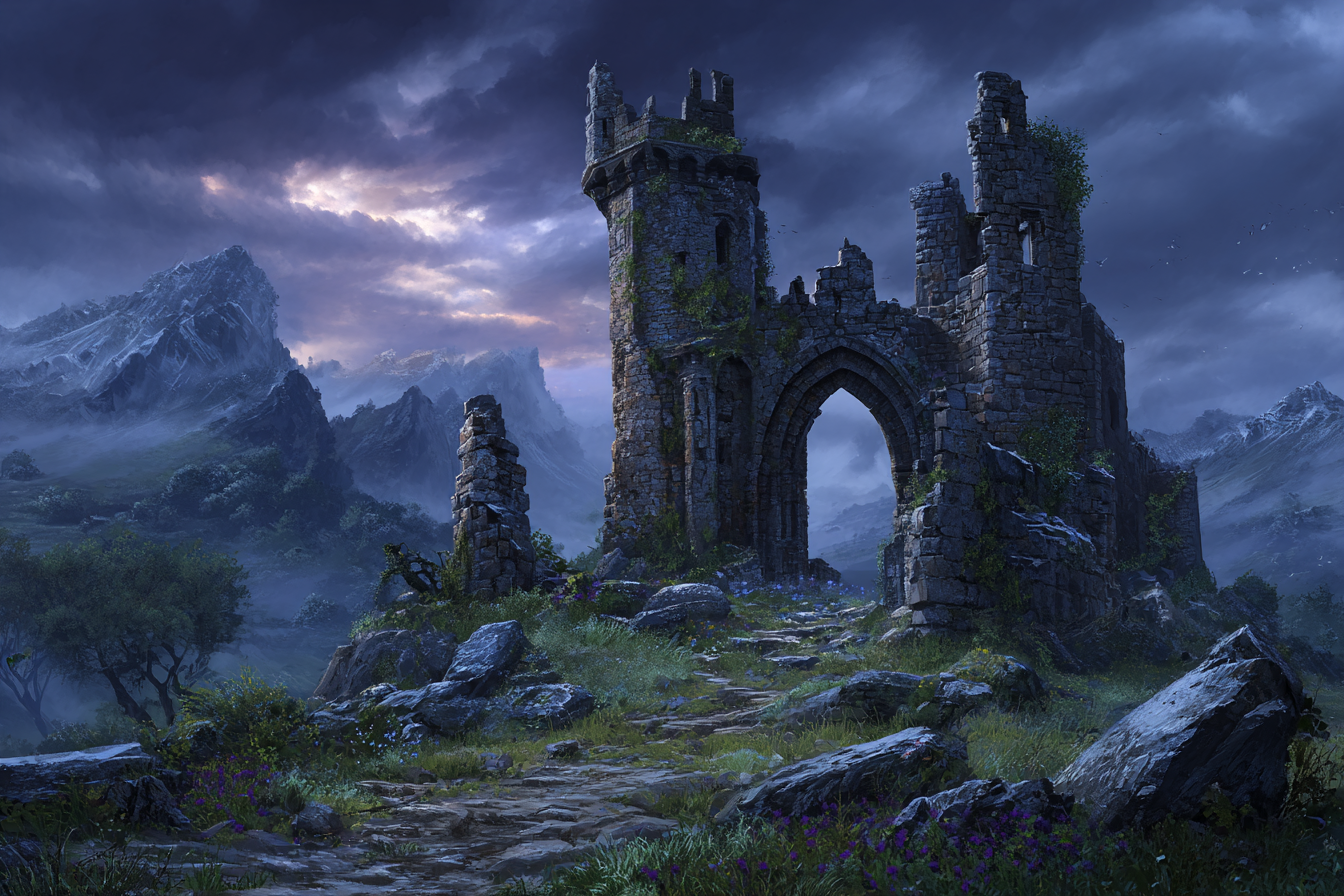
Far to the north, where the land goes grey and the marches are failing and the Rangers hold a line that everyone south of it has agreed to forget, a man named Corvane stood over a thing that should not have existed. He had been following the wrongness for eleven days, and he had found it at last in a fold of dead ground a full week's ride south of where the blight had any business reaching: a ring of blackened stones, and within it a rite half-worked and then abandoned in a hurry, the way you abandon a thing when it has done what you needed and you no longer care that it is seen.
It was the not-caring that frightened him. The dark that leaks up from the Wound is blind. It spreads the way water spreads, downhill and without intent, and a man who has spent his life on the marches learns its grammar the way he learns weather. This was not that. This had been placed. Someone had carried the dark south, on purpose, past every ward and every watch, and set it down here like a seed.
He was still on one knee at the edge of the ring when the cold in the ground deepened all at once, everywhere, as though something long patient and very far away had finally been given leave. He looked up. The far sky was wrong. He could not have said how, only that it was, the way you know a familiar room has had one thing moved in it in the dark.
Corvane had spent a year of his life trying to make the soft south believe that the dark was rising, and being guided. He had been called a fatalist, and a liar, and a ranger too long alone with the cold. Kneeling there in the ruined ring, under a sky that had just lost one of its lights, he understood that the argument was over. Not because anyone had finally believed him, but because there was no longer any time left in which to be doubted.
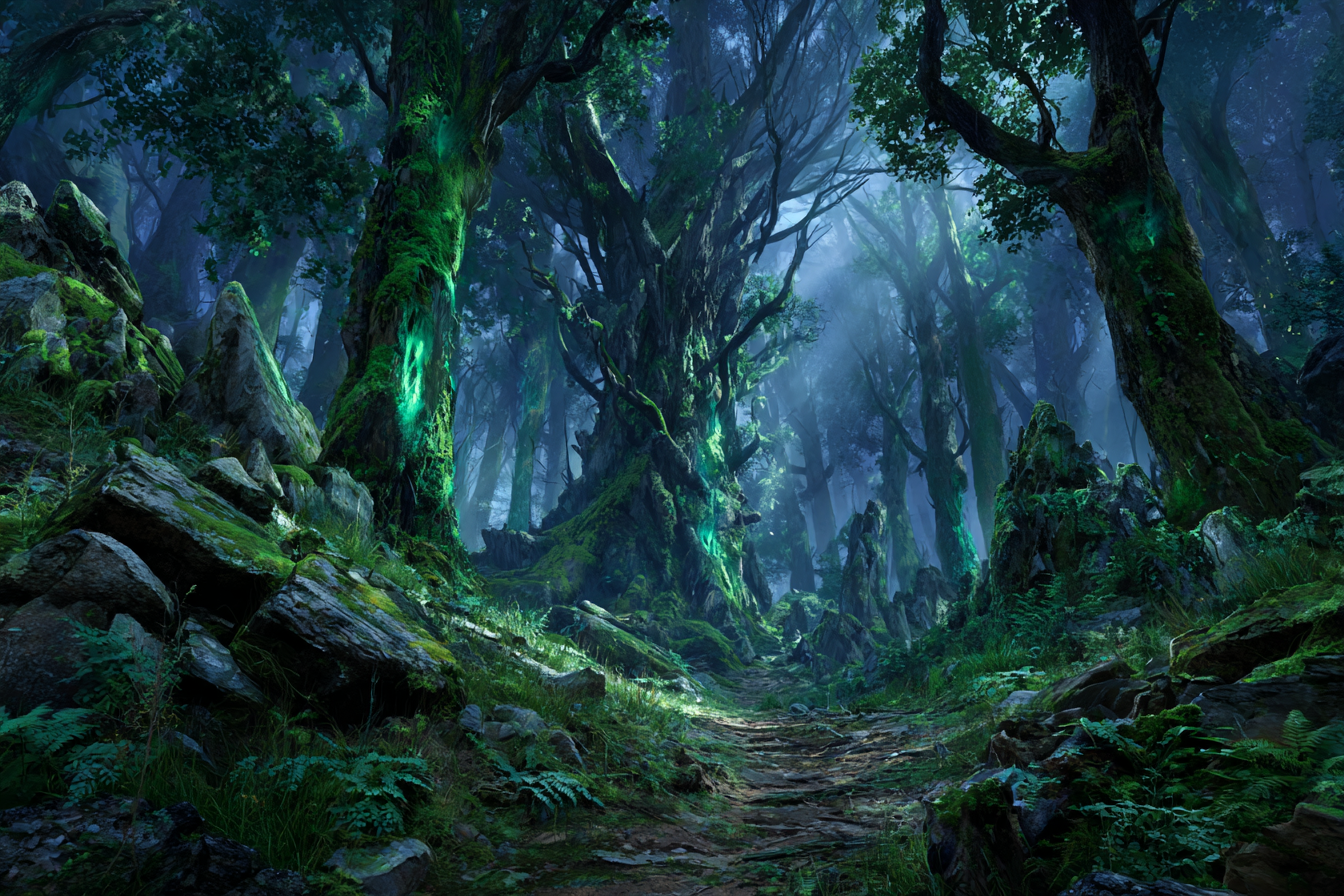
In a small green valley that had never once mattered to anyone and had never wanted to, a hearth-brownie named Wick sat up in its hollow with its heart going like a trapped bird. The sprites of the near wood had gone quiet. All of them. At once. Wick had lived in the valley longer than the family it kept, longer than the house, longer than the oldest tree it could see from its hollow, and it had never known the wood to fall so completely still. It was the particular stillness of a room in which someone has just died, when the air itself seems to be holding what it can no longer say.
Wick put a small hard hand to its own chest, where the light lived, the ember of world-magic that was not a thing the brownie had but a thing the brownie was, and felt it flicker. Thin. Guttering. It would not steady, however Wick held it, the way a candle will not steady in a draft you cannot find the source of.
Wick did not know the word for what it felt, because in all its long small life it had never had need of the word. The word was afraid.
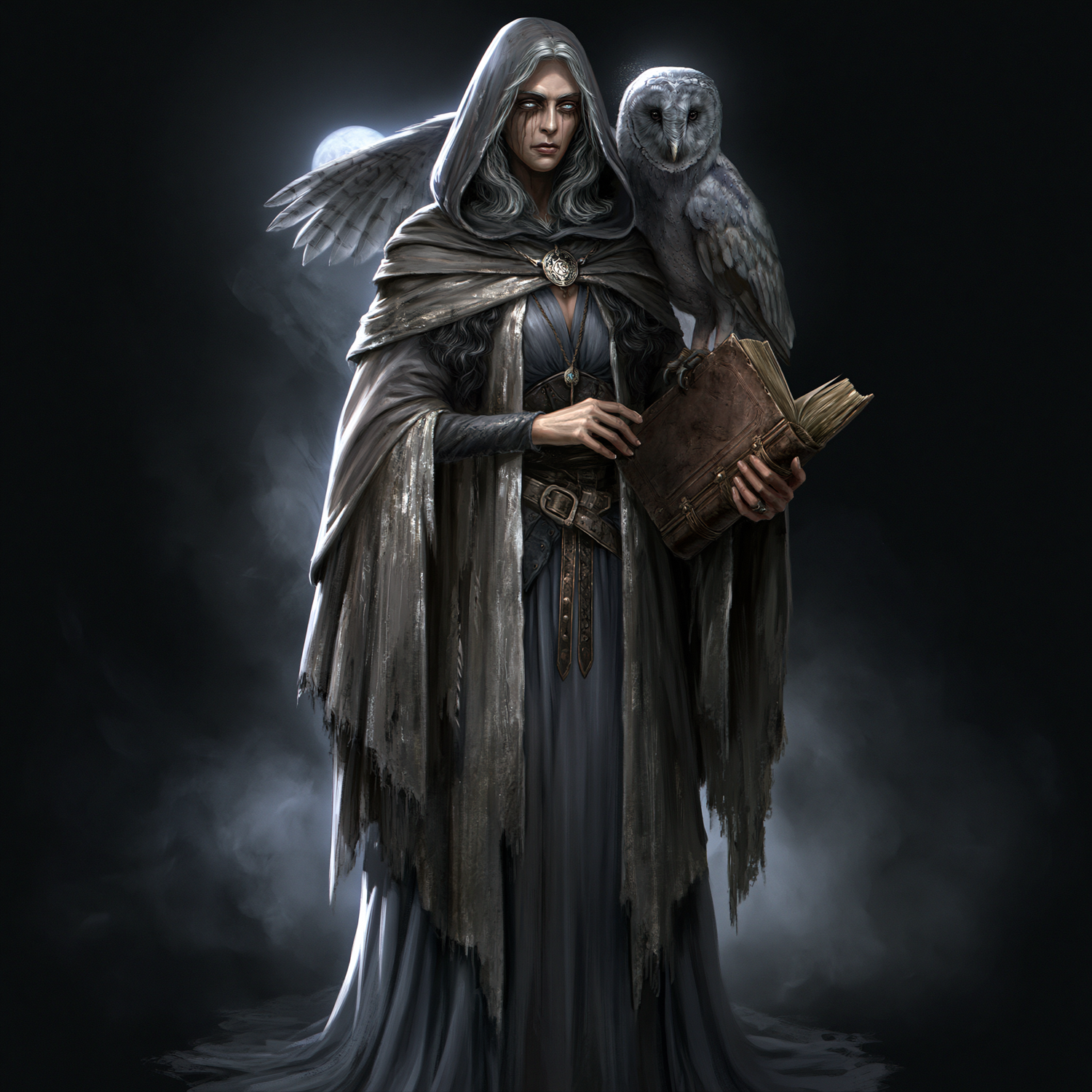
I was not in the temple, nor on the marches, nor in the valley. I was where I have always been since the gods went away, at the edge of things, watching, and my owls brought me the rest, as they always do, on soft wings, in the dark.
This much is certain, and I will set it down first because it is the only thing that everyone who lived through that night would later agree on: the light went out. What it was, and whose it was, and whether its going was the last of an old ending or the first of a new one, the world could not agree on then and has not agreed on since. They made their wars over the meaning of it, and the wars are the rest of this account, and I will give them to you in their turn, as truly as I can.
But I wanted you to have the first night whole, before the reading and the blaming began. Because for one dark hour, before anyone had decided what they had seen, it was simply, terribly true. The light went out. And the whole world stood in its streets and its cold and its small green valleys and held its breath, and waited to learn what kind of night it was.
It is still waiting. So am I.