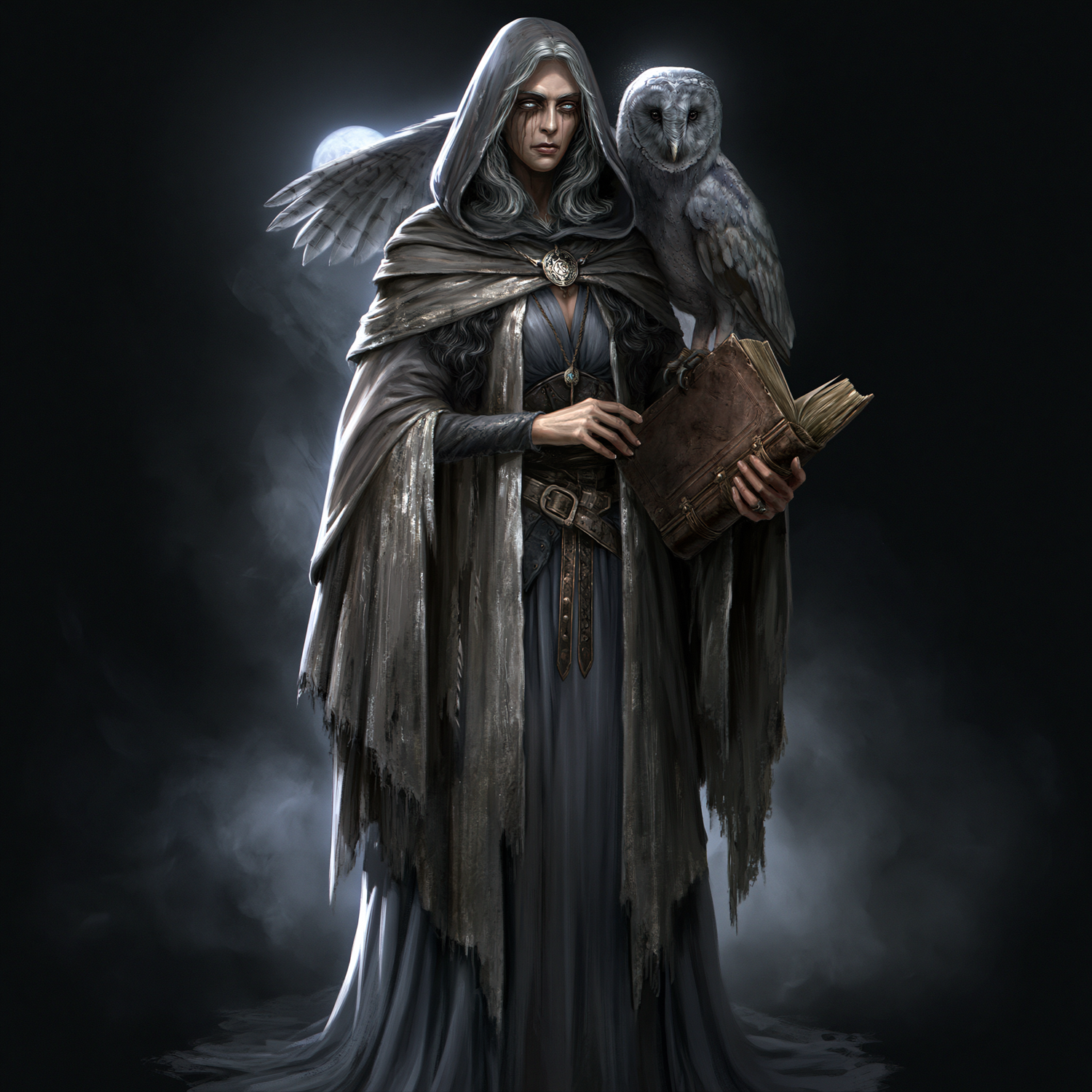
The Voice of the Series
The Chronicler
Your narrator, and a mystery in her own right
"I take no side in what follows. I only set it down, so that when the light is gone there is still a true account of how it went out."
Every saga of the Fallen Wyrms is told in her voice. She is not a hero of it. She lifts no hand, takes no side, and rescues nothing. She watches, and she writes, and what she writes is true. In a world that is ending slowly, the way a fire goes to embers, she has appointed herself the one thing the ending cannot take from it: an honest account of how it went.
This is not coldness, though it can look like coldness. It is a discipline held at enormous cost. She has reasons to act, and the power to, and she has decided that the truest gift she is still permitted to give is a record that no one has bent toward comfort. She is the reader's way into the world, a clear eye in a failing dark. She knows far more than she says. She says only what she has seen.
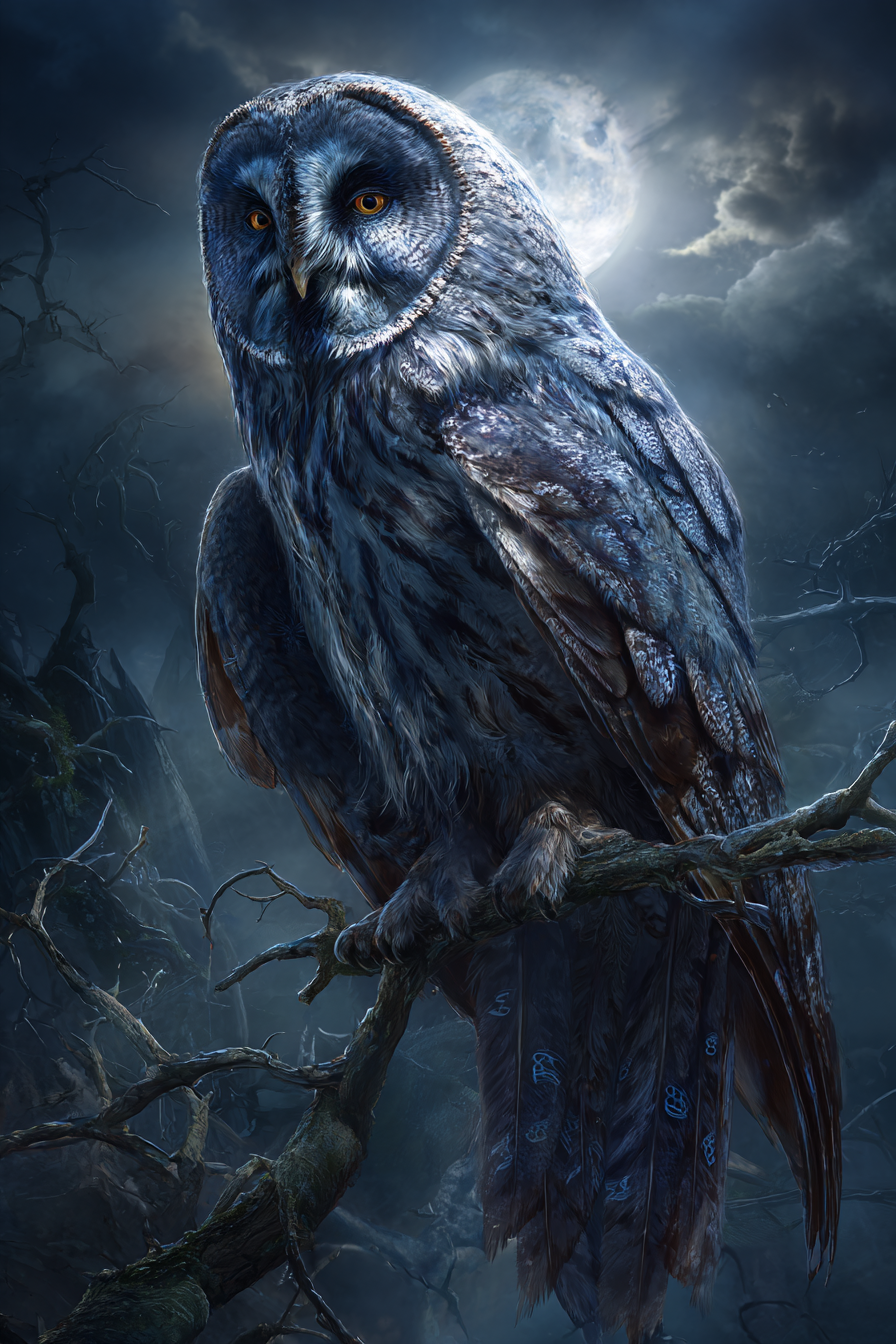
She does not need to travel to know the world, and she rarely does. The owls are her eyes. They cross the failing marches and the drowned coasts and the last golden reaches of the south, and what they see, she sees, and what she sees, she keeps. When an old man dies unwitnessed at the frayed edge of the map, an owl is there in the rafters, and so, in the only way that still matters to her, is she.
It is why the account can be trusted, and why it unsettles the powerful. There is very little in the ending world that happens entirely unseen. The kings who tell themselves their worst hours went unwatched are wrong. She watched. It is written down.
She lets the world call her the Chronicler, and the name is true enough. It is not her first name. Before the world was broken she was Silvara, goddess of truth and of memory, the Loremaster of the pantheon, and when the war against the Fallen was lost she withdrew with the loyal gods and left the world to its long dusk.
She did not withdraw to rest. She withdrew to witness. Of all the gods who left, she is the one who never truly left, only stepped back far enough to see the whole of the world going dark at once, and stayed close enough to write it down. The others turned away because they could not bear to watch. She turned toward it for exactly that reason: because someone had to, and because a thing unwitnessed is a thing half lost, and she is the goddess who will not lose the memory of anything.
She could, perhaps, do more than write. That is the wound at the center of her, and the question the saga circles without ever quite letting her answer. She has decided that a true record is the one thing she is still allowed to give, and she keeps that decision the way the keeper kept the Everflame: past the point where anyone alive would blame her for setting it down.
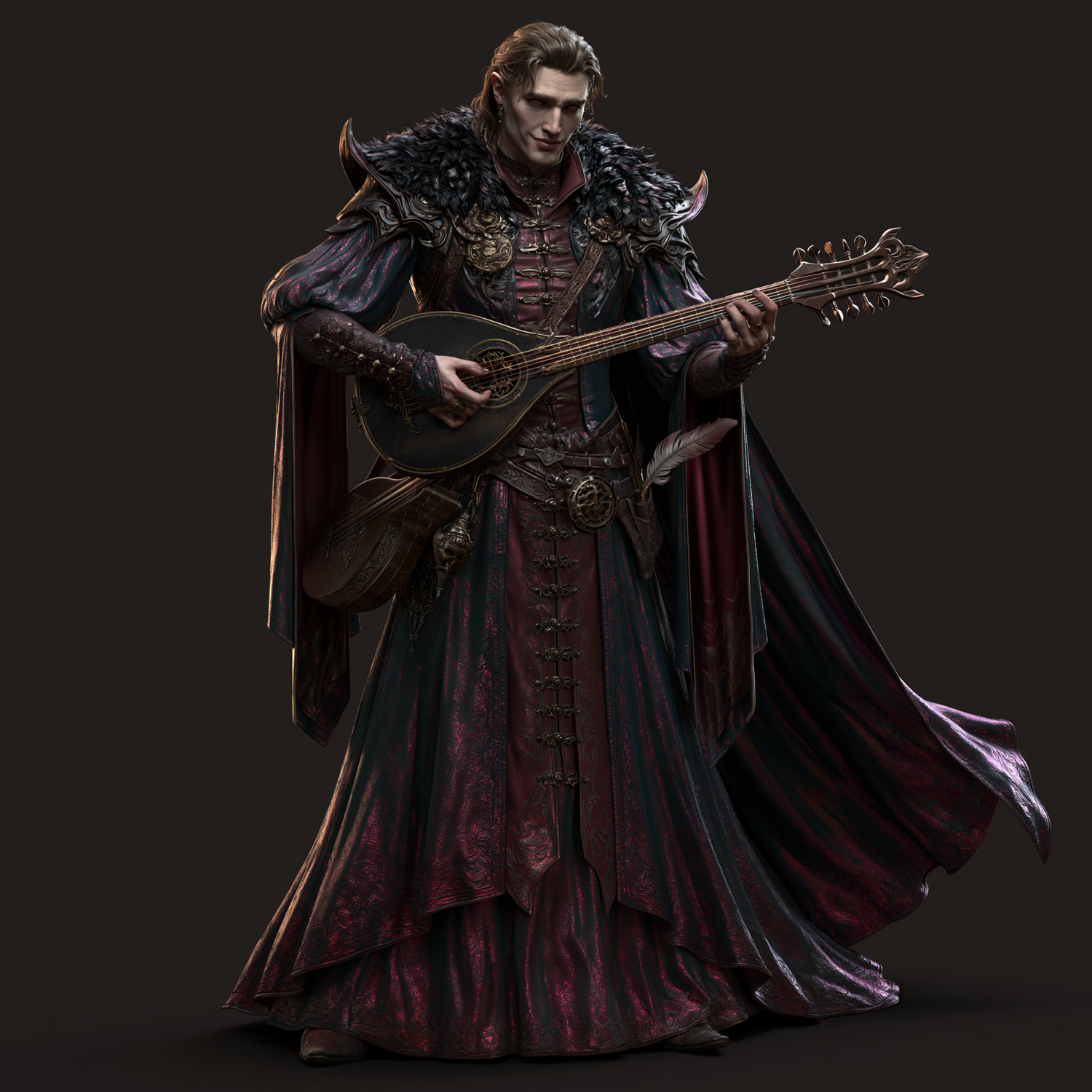
She has one true opposite in all the world, and once he was her love. Cael was the Songlord, the god of story and music and heroes, and he fell for the oldest temptation offered to a maker: the promise of writing the tale of the universe himself, and being obeyed by it.
Now he is the Deceiver, the god of lies, and he gives the failing world beautiful, useful, false stories, and the world believes them because they are kinder than the truth. He writes what should have happened. She writes what did. Everything that stands between them, and everything the saga turns on, is that single difference.
He writes what should have happened. She writes what did.
Begin where she begins: the night the light went out, and the world did not yet know what kind of night it was.